
How I Wrote a Book
It was not a linear journey!

Whenever I tell someone that I sold a novel, the most common response I get – by a lot – is some variation of, “I could never write a book!”
To that, I say: Not with that attitude!
In all seriousness, I get why books are intimidating. Staring at a blank document and knowing you need to come up with somewhere between 75,000-95,000 words to fill it is like standing at the bottom of a mountain and knowing you gotta make it to the top. And that’s provided you have an idea for a book in the first place!
Having chatted with author friends of mine, I know that every writer has a different approach to turning that blank document into a shiny novel for people to read, so I can’t tell you exactly how to write a book. Finding your process is part of the fun, imo! But I can tell you how I wrote a book and maybe de-mystify that process a little bit, in case you’ve got an idea rumbling around inside your head.
First, my credentials, in case you don’t know me: Hi, my name is Tyler McCall, and my debut novel PEOPLE LIKE YOU comes out in spring 2027! Soon I’ll have a cover and a preorder link and all that fun stuff, but until then, you can follow me over on Goodreads to stay updated.
For some, the very concept of coming up with an idea for a novel is foreign, and I get it. I definitely couldn’t open up a blank document and force myself to come up with ideas. Explaining the way I get ideas for stories actually makes me sound a bit nuts, I think, because the way it has always happened is that I’ll be in the middle of something – showering, reading, out on a walk – and a scene or a bit of dialogue will pop into my head. The characters are already there and they’re real, even if they’re still pretty fuzzy to me.
That’s what happened with PEOPLE LIKE YOU. The initial idea came to me in 2022; it’s funny, actually, how specifically I can remember the moment it happened, because it was January and I was at my in-laws for a delayed Christmas celebration. It was late at night, I was reading because I couldn’t sleep, and the image of Jacob and Charlotte – my two main characters – arguing in a private library sprung into my head fully formed. I could see their dynamic so clearly, that even while they were at odds with each other, they wanted each other desperately. (I really can’t wait until the book is out so I can discuss which scene this is!)
Whenever I have a scene pop into my head that I find interesting, I try to imagine those characters in a few different scenarios. If I can’t put together maybe another five to ten snippets, it usually dies (or, if I like the scene enough, gets absorbed into a different story). But usually, while I’m pulling on those threads, a fuller picture starts to come together and that’s when I know I’m cooking.
I was very intrigued by Jacob and Charlotte (though they didn’t have names yet!), so I started pulling at the thread of what they were arguing about, where they were, who they were. I knew immediately that the library was in his home, and that there was a major class difference between the two; something in the air told me it was summer, which led me to the Hamptons. They’d been rivals in high school; this summer was the first time they’d seen each other as adults. More and more scenes with them starting growing like weeds.
From there, I started writing out the scenes I had in my head to get them down on paper. Two thousand words here, another five thousand there, and suddenly I had something like ten thousand words, which is a lot. Now, those 10k words weren’t really connected by much other than the same two characters; I didn’t have an outline or an end goal in sight (well, beyond getting them to kiss – I really, really wanted them to kiss, because they wanted to kiss, you know what I mean?).
At this point in my career, a lot was changing. I was the editor-in-chief of Fashionista.com, but by that summer, I’d made the decision to go freelance and I was establishing a pipeline of freelance work to get paid. But I knew when I left my full-time job that turning this idea into a novel was a major goal. I kept immersing myself in Jacob and Charlotte’s world, where I’d find them in different scenarios or interacting with new people. Slowly, the world began to populate around them: friends and nemeses, jobs, apartments, daily routines. I was able to put together a calendar of events for their summer together, which led to a firmer outline. Once I had that outline in hand, I could reorder the snippets I’d already written and start filling in the gaps.
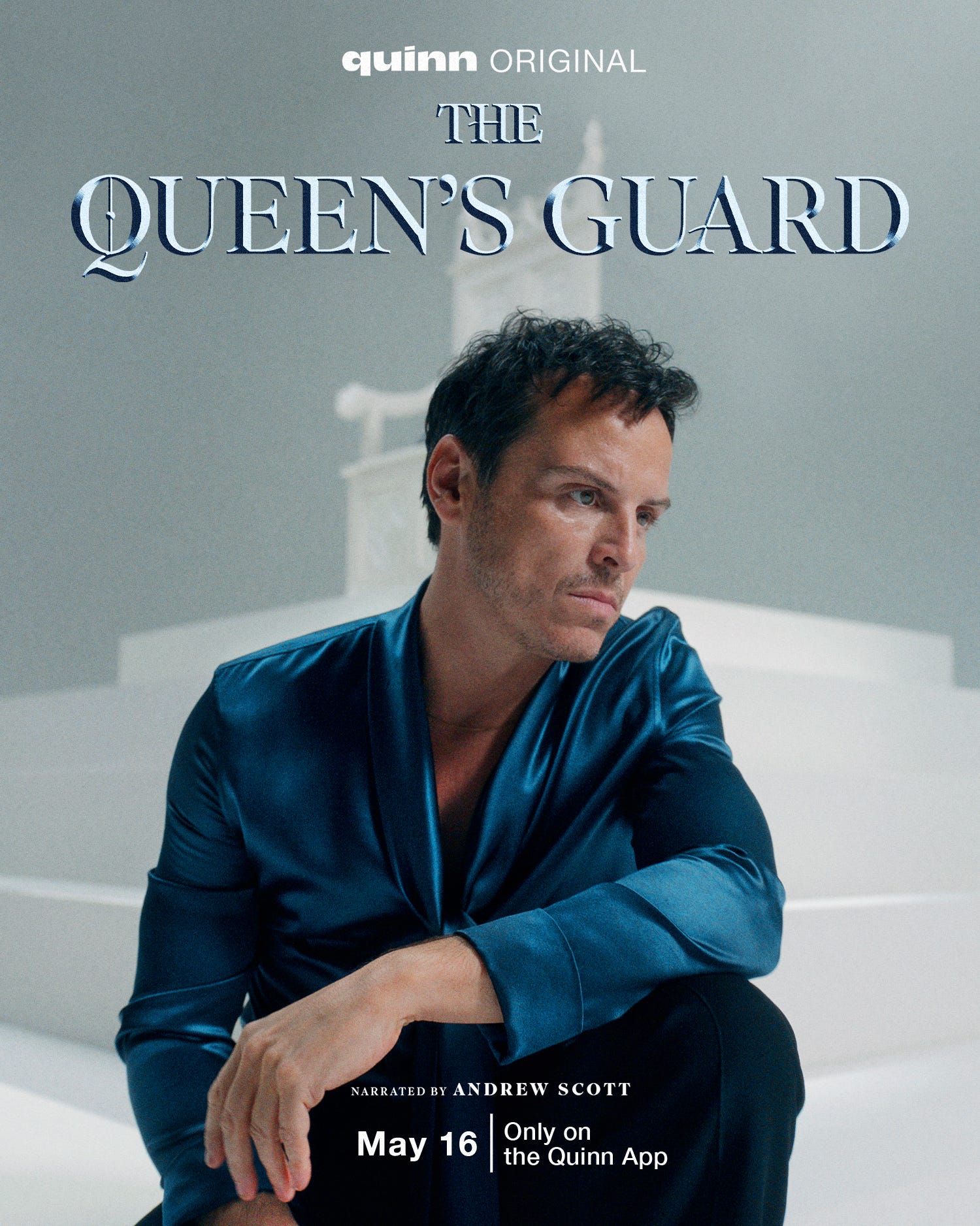
Obviously, I started in 2022 and it is now 2026. Getting this book finished was far from a straight line! When I left my job, I was also working on a proposal to write a nonfiction book about Gossip Girl, which eventually got back-burnered (story for another day) but required a lot of focus. There was a period from late 2023 through 2024 where I was writing scripts for the audio erotica app Quinn. (Scripts which became The Queen’s Guard starring Andrew Scott and The Trials starring Jamie Campbell Bower!) And, of course, the freelance work, which was the day job.
But I’d go through phases where the freelance work was light and I’d chip away at my novel in big chunks, 20k-30k words at a time. I am not someone who can set a timer or a word count goal for myself and write for an hour here or a half hour there, though I know plenty of writers who work like this. I like to let my brain completely sink into the world of my characters and marinate there until the words start flowing, and that can look like hours and hours of writing. (That includes some online shopping breaks whenever I’d get stuck, naturally.)
It got to a point – about 65k words – where it started to feel like a real book, so naturally, I did something a little goofy. I’d been writing in the first person, and something about it was starting to feel wrong, so I thought: Well, I’ll just try writing a chapter in third person, poll a few trusted minds about the difference, and go from there. One chapter rewrite turned into two, turned into three, turned into…you guessed it, rewriting everything I’d done that far. Would not recommend!!!! Because here’s the thing: it was the right decision. The book is stronger in third person than it was in first, imo. But rewriting was actually a delay tactic that kept me from writing anything new.
That sounds counterintuitive, right? Why would I delay finishing something I wanted to do? The answer is twofold: First (and if you’re a creative, you’ll understand this), having new ideas and tackling new projects is the fun part. Getting into the grind of making those ideas something real can be hard and annoying and sticky. I’d hit one of those sticking points – I needed some connective tissue to get from point A to point B, which is always where my writing hits a block – and rewriting was a way to feel productive.
Second, and worse: I was letting the self-doubt creep in. My therapist has heard hours of me fretting over my fear of failure, that fear which has kept me from doing a lot in my life. For me, that manifested as thinking: This book isn’t going to be the Next Great American Novel, so what’s the point? Or I’d read an incredible romance novel from one of my favorite authors and think, I’m never going to be able to top that! And I’d sink into a months-long writer’s block.
Most crucially, if I never finished the book, I could never fail at selling it. So long as it remained a half-finished draft, the dream of becoming an author could never be killed off. This fear is the number one reason you haven’t finished that creative project, I promise.
But I couldn’t shake Jacob and Charlotte – I didn’t want to shake them! They’re my precious little babies and I needed them to fall in love. And after one of those quiet periods of no writing, I looked at my draft and realized I was at least three-quarters of the way done, if not more, so it was frankly silly that I wasn’t finishing the story.
This is where I called in the professional: My friend and Radio 831 co-host Sanjana has worked as a book coach and beta reader1, so I quite literally hired her as my “book doula” to get that last chunk done. I knew from my career as a writer that what I needed was someone who would hold me accountable for getting PEOPLE LIKE YOU over the finish line, who could bring an outside eye to my sticking points and who could gently-but-firmly tell me to get this thing finished. She was kind of like the editor-before-my-editor.
So then I had a finished book, right?
Wrong, diva!
I had a finished draft, yes. But once I had it somewhere I felt good about, I paid Sanj again to do a beta read for me to pick out any weak points – again, if there’s one thing I learned from my career, it’s that I love a good editor – and I also sent to a few trusted friends for feedback. From there, I did some more tweaking and then it was time to find an agent.
More on that soon!
Long story short, if you’re wanting to write a book, but you’re waiting for the time to be right or the conditions to be perfect or the secret steps to be unveiled to you: don’t! Literally just start writing. Like, right now - go open a Notes app or a Google Doc or your writing app of choice (if you’re interested, I used and like Scrivener) and get your fingers typing.
Because here’s the thing: So, so much about PEOPLE LIKE YOU has changed since I first started writing that scene all those years ago. (And I honestly can’t wait until we can chat about those changes, because some of them are very fun.) But the way I wrote a book is…writing the damn book. It’s the only process all of the authors I know have in common!
If you’re unfamiliar with the term “beta reader,” it means a kind of test reader, someone who can go through the work and offer feedback.
Loved reading this. And can't wait to read the book!
so excited for People Like You!